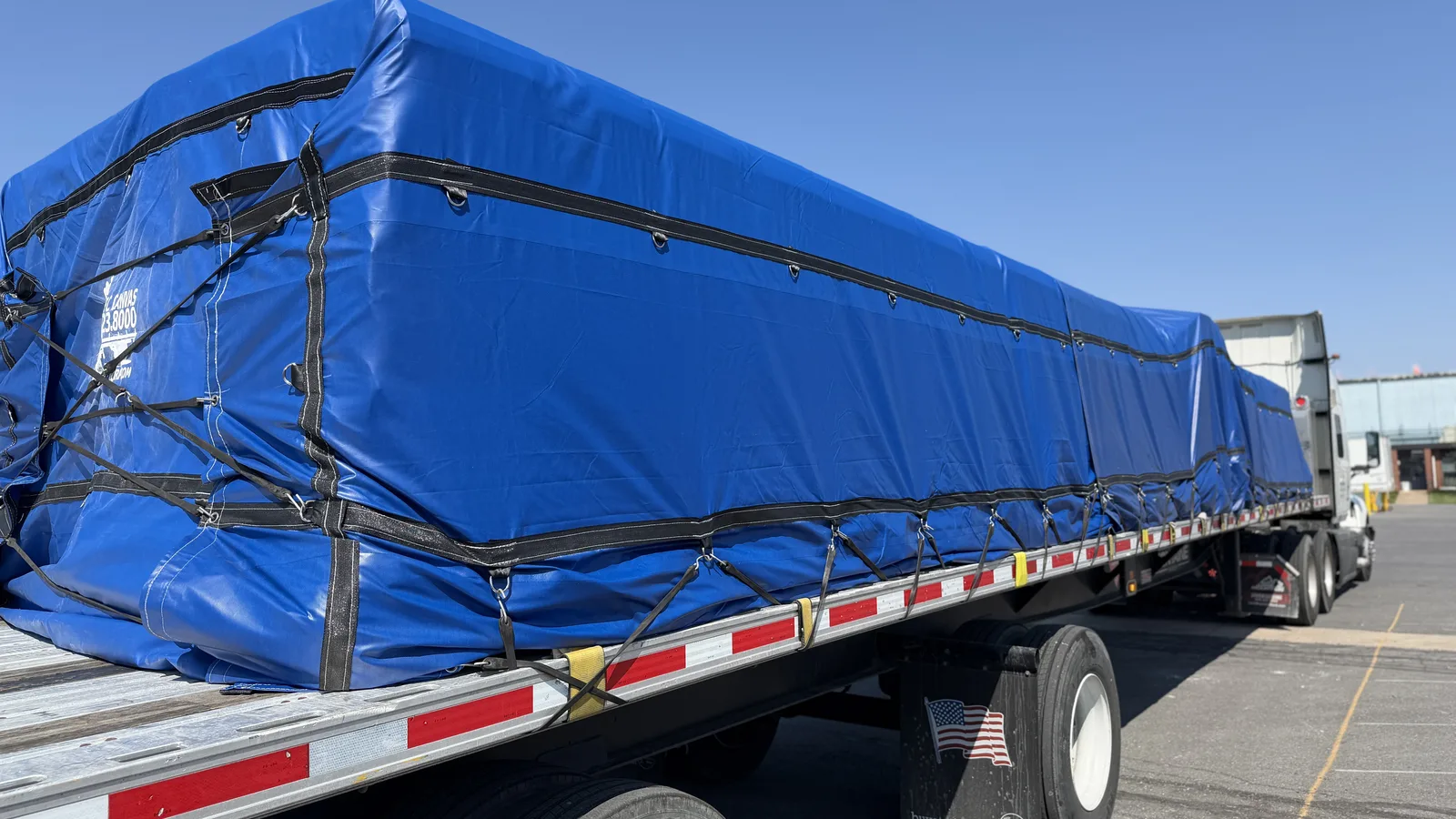
On a dry van, the trailer protects the freight. On a flatbed, the driver does. Everything holding your load on the deck — and keeping it dry — is a decision the operator makes before the wheels turn.
Here’s what that looks like when it’s done right.
Securement is math, not muscle
Federal rules set a minimum number of tie-downs based on the length and weight of the cargo, plus enough aggregate working load limit to hold it. Doing it properly means:
- The right count. More tie-downs for longer, heavier, or higher freight — not a fixed number out of habit.
- The right hardware. Chains and binders for steel and machinery; straps for finished or coated surfaces that chains would mar.
- Edge protection. Corner protectors so a strap doesn’t cut into the load — or the load doesn’t cut the strap.
- Re-checks en route. Cargo settles in the first 50 miles. A load that was legal at the shipper gets re-tensioned down the road.
Tarping is weather insurance
If the freight can’t get wet or road-blasted, it gets tarped — and a tarp job is only as good as its worst corner. Done right, it’s smooth, tight, and tied so wind can’t get under it at 70 mph. Done wrong, you’re explaining water damage to a shipper.
Why the agent should care
Every claim starts as a load someone rushed. Proper securement and tarping is the cheapest insurance in freight — it’s the difference between a clean POD and a damage report. When the truck does it by the book, the agent’s phone stays quiet. That’s the point.
Want a carrier who tarps like the claim depends on it? Contact for capacity.